Pros and cons compared
Choosing between a private preschool and a public pre-K program is one of the biggest early education decisions families make. And the truth is, there’s no one-size-fits-all answer.
For families in Natick, Framingham, Sudbury, and the surrounding communities, the decision can be especially challenging because our local public school systems offer strong preschool and pre-K programs. For many parents, the affordability of public preschool makes it an appealing option.
At the same time, private preschool can offer benefits that are important for some children and families.
The first consideration to ask yourself as a family considering early education options for your child is what your family is looking for from the school/experience.
TL;DR
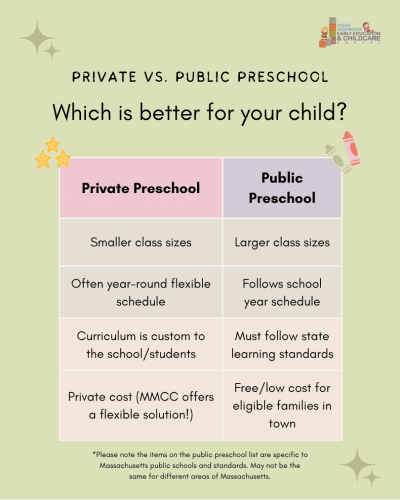
A quick list of private preschool vs. public preschool factors to consider
Top questions of families looking for early education:
Will my child be safe, happy, and cared for?
Before anything else, parents want to know their child will feel secure and supported throughout the day. They look for nurturing teachers, a welcoming environment, strong communication, and a place where their child will be known as an individual—not just another student.
Will this program prepare my child for kindergarten?
Families want confidence that their child will be ready for the transition to elementary school. They’re often looking for a balance of academic foundations, social-emotional development, independence, and opportunities to learn through play. Beyond academics, these areas of development are critical to your child’s overall happiness and well-being.
Can we see our child thriving here long-term?
When touring a school, many parents instinctively picture their child in the environment. They’re asking themselves: Can I see my child making friends here? Learning here? Feeling confident here? The answer to that question often becomes the deciding factor.
Knowing what you want from an early education program makes it easier to evaluate your options. Let’s take a look at some of the key differences between public and private preschool.
Comparing private preschool vs public preschool:
Cost and affordability
This is arguably the most significant difference for local families. Cost is often one of the biggest differences between private and public preschool. Public programs may be available at little or no cost to eligible families. To remove this concern from families seeking high-quality private daycare, Mini-Miracles now offers The Growing Together Fund, an income-based tuition assistance program that helps qualifying families access high-quality private preschool without navigating lengthy state waiting lists. This allows families to receive support immediately and choose the program that’s the best fit for their child.
Class sizes in private preschool vs public preschool
One advantage of a private preschool is smaller class sizes, which often allow for more individualized attention and support. This also allows private programs to take time to focus on the whole child. Mini-Miracles have flexibility to support social-emotional development, creativity, independence, and confidence alongside academic readiness.
Flexible schedule and hours
Another significant difference in private preschool vs public preschool is flexibility. While public preschool programs generally follow the school district calendar and schedule, Mini-Miracles offers year-round care, flexible scheduling options, early drop-off, and extended-day care. For many working families in Natick, Framingham, and Sudbury, that flexibility can make a meaningful difference in their daily routines.
Individualized learning and support for your child’s milestones
Teachers in private settings usually have more freedom to tailor their teaching, which can lead to a more personalized experience. This is critical for young children because they all develop at different rates.
At Mini-Miracles Childcare, our teachers tailor learning experiences to the unique needs of each child and classroom. We believe early education should nurture not only what children know, but who they are becoming.
Conclusion
Ultimately, the best preschool is the one that meets your child’s needs and supports your family’s lifestyle. For families in Natick, Framingham, Sudbury, and surrounding communities, the good news is that there are strong early education options available.
Whether you’re considering public pre-K, private preschool, or both, we encourage you to explore your options, ask questions, and find the environment where your child will thrive.